Education

Courses

Teaching resources in physical geography, natural hazards, risk perception and disaster management.

Geographical Theory and Methodology cover

year of study: Year I | author: Iuliana Armaș

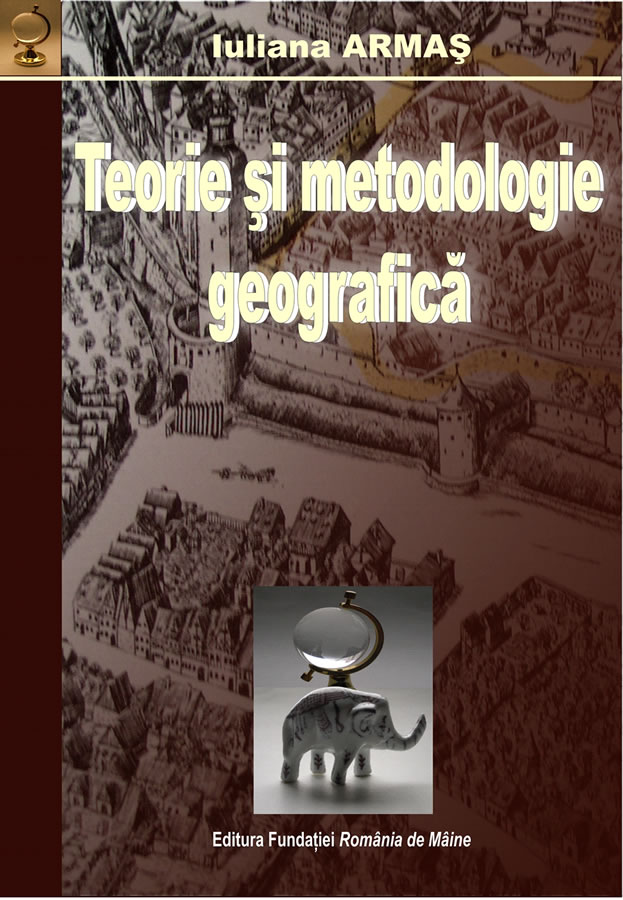
Geographical Theory and Methodology

The beginning of the third millennium is marked by a holistic reorientation in science, driven by the need to reintegrate human society sustainably within its planetary environment. This tendency is particularly justified because twentieth-century science often favoured analysis over synthesis, creating the risk that overspecialisation would sever the connection with the whole. The Geographical Theory and Methodology course introduces first-year students to the development of geography as a modern science of terrestrial space. Like every science, geography emerged from practical human needs and responded differently to the conditions of each historical period. Modern geography stands at the intersection of science, method and general culture.
General Physical Geography cover

year of study: Year I | author: Iuliana Armaș

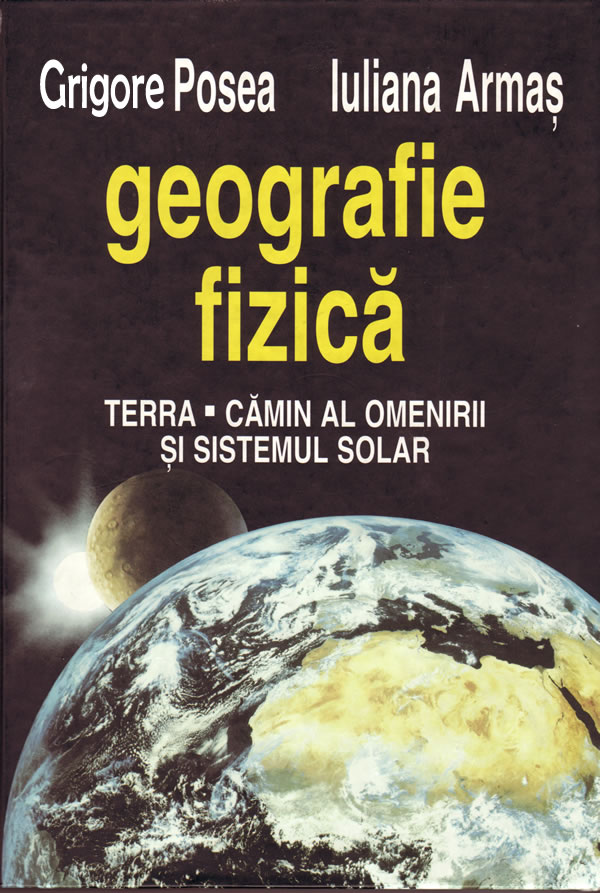
General Physical Geography

The General Physical Geography course provides first-year students with a synthesis of the Earth and its place in the Solar System and, more broadly, of geography as a science with an exceptionally wide field of study, centred on correlations and interdependencies. The course aims to identify the uniqueness of the terrestrial environment from the perspective of our planet’s integration within the Solar System. A major objective is to understand the structure and functioning of geosystems and their relationships with social and human systems. Practical work introduces students to geographical research methods and supports independent thinking, coherent expression and a global geographical understanding of terrestrial interdependencies. Students learn to interpret these mechanisms from local to global scales and to understand how the importance of an environmental element depends on the scale of analysis.

Geomorphological Hazards cover

year of study: Year II | author: Iuliana Armaș

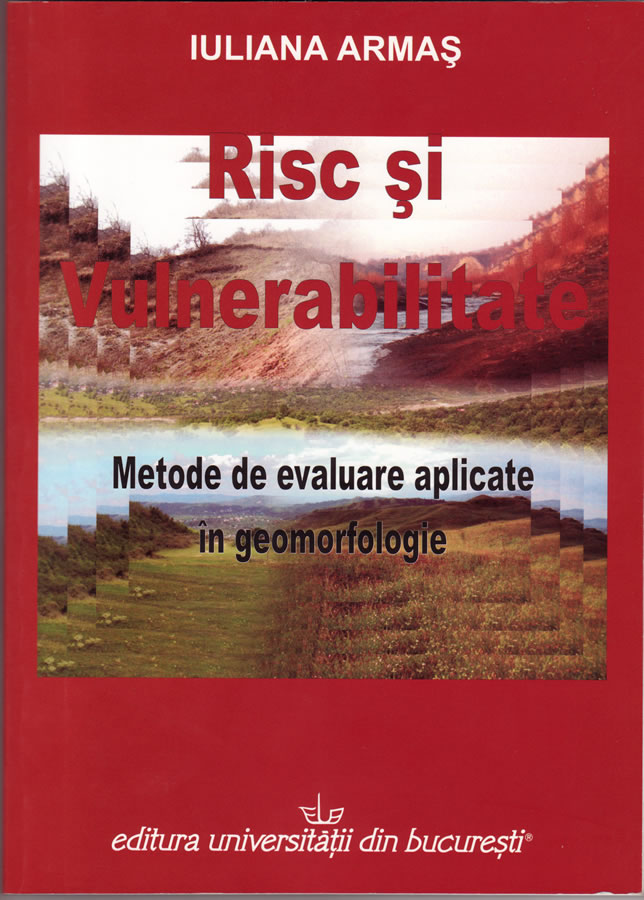
Geomorphological Hazards

Although the concept of risk appeared in the Middle Ages in discussions of lending, where interest was justified as compensation for the possibility of losing money, the science of natural risk is a twentieth-century development. Natural-risk research took shape following the American geographer Gilbert White’s 1958 observation that developing highly unstable areas increases the potential for material and human losses at national-economic scale. In White’s definition (1974), natural-risk research examines interactions between human communities and the environment, governed by adaptive capacity and physical laws. Traditionally, natural disasters were attributed to extreme phenomena whose magnitudes exceeded ordinary values and became dangerous to communities (Burton and Kates, 1964). This view shaped the 1990s International Decade for Natural Disaster Reduction and encouraged engineering solutions for risk reduction (Cannon, 1994). White and his collaborators had already highlighted the danger of overestimating environmental safety following engineering interventions through research conducted in the second half of the twentieth century.

Natural Risk Perception cover

year of study: Master | author: Iuliana Armaș

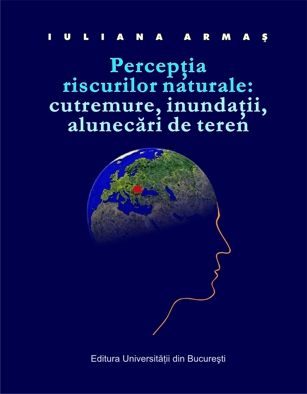
Natural Risk Perception

For exposed and vulnerable communities, natural-risk perception is an essential link in analysing human-environment coping relationships and an important parameter in quantifying complex vulnerability, the central variable in the risk equation. The course introduces master’s students in Environmental Risk Analysis and Assessment to methods for evaluating natural-risk perception and the specific patterns through which communities relate to natural-risk situations according to environmental characteristics and indicators of social, economic and psychological vulnerability. The dispositional model assumes that latent factors may stabilise and generalise behavioural responses across multiple types of natural-risk events. The identification and appropriate measurement of traits such as anxiety, vulnerability to stress, locus of control and intolerance of uncertainty can act as predictors of aggregated behavioural variables, including adaptive and maladaptive coping, with applications in disaster management.